
A Keloid scar is a type of raised scar that forms when the body produces too much collagen during the wound-healing process. Unlike normal scars, keloids grow beyond the borders of the original injury and may continue enlarging over time.
Keloids can develop after surgery, acne, burns, cuts, piercings, or even minor skin injuries. While they are not dangerous, they can become itchy, painful, or cosmetically concerning for many people.
What Is a Keloid Scar?
A keloid scar is an overgrowth of scar tissue that develops after the skin has healed from an injury. The scar becomes thick, firm, and raised due to excessive collagen production.
Keloids may appear:
- – Weeks or months after an injury
- – Larger than the original wound
- – Smooth and shiny
- – Red, pink, brown, or darker than surrounding skin
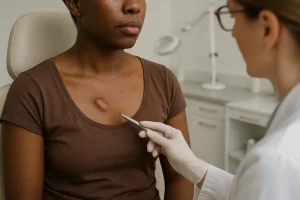
Common areas where keloids form include:
What Are the Symptoms of a Keloid Scar?
Symptoms vary depending on the size and location of the scar, but common signs include:
- – Raised or thickened skin
- – Scar growth beyond the original wound
- – Itching or irritation
- – Tenderness or discomfort
- – Tight or firm skin texture
- – Gradual enlargement over time
Some keloids may also cause emotional distress due to their appearance.
What Causes Keloid Scars?
The exact cause is not fully understood, but several factors may increase the risk of developing Keloid scars.
Skin Injuries
Keloids can develop after:

Genetics
People with a family history of keloids are more likely to develop them.
Skin Type
Keloids are more common in individuals with darker skin tones, although they can occur in any skin type.
Hormonal Changes
Hormonal fluctuations during puberty or pregnancy may increase keloid activity in some individuals.
How Are Keloid Scars Treated?
Treatment depends on the size, severity, and location of the scar. In many cases, a combination of treatments provides the best results.
Do Steroid Injections Help Keloids?
Corticosteroid injections are one of the most common treatments for keloids.
They can help:
- – Flatten raised scars
- – Reduce inflammation
- – Relieve itching and pain
- – Slow excessive collagen production
Multiple sessions are usually required for noticeable improvement.
Can Laser Therapy Remove Keloids?
Laser treatment may improve the color and texture of keloid scars. It is commonly used to reduce redness and smooth the skin surface.
Laser therapy is often combined with other treatments for better long-term outcomes.
Does Silicone Gel Work for Keloids?
Silicone sheets and gels are widely used for scar management.
They may help:
- – Soften scar tissue
- – Reduce thickness
- – Improve hydration
- – Minimize irritation
Consistent use over several weeks or months is typically necessary.

Is Surgery Effective for Keloid Removal?
Surgical removal may be recommended for large or severe keloids. However, surgery alone may trigger another keloid to form.
To reduce recurrence risk, doctors often combine surgery with:
Can Keloids Return After Treatment?
Yes. Keloid scars can recur even after successful treatment.
Long-term scar management and follow-up care are important for reducing recurrence.
How Can You Prevent Keloid Scars?
You may reduce the risk of keloid formation by:
- – Avoiding unnecessary piercings
- – Treating acne early
- – Following proper wound care
- – Using silicone scar products during healing
- – Protecting healing skin from irritation
People with a history of keloids should inform their doctor before cosmetic procedures or surgeries.
When Should You See a Doctor?
You should consult a healthcare professional if your scar:
- – Continues growing
- – Causes pain or itching
- – Becomes cosmetically concerning
- – Restricts movement
- – Changes rapidly in appearance
Early treatment may help prevent the keloid from becoming larger or more difficult to manage.

Final Thoughts
Keloid scars are a common type of abnormal scar tissue that can continue growing long after a wound has healed. Although they can be challenging to treat, modern therapies can improve both symptoms and appearance. Early diagnosis and a personalized treatment plan often provide the best long-term results.
