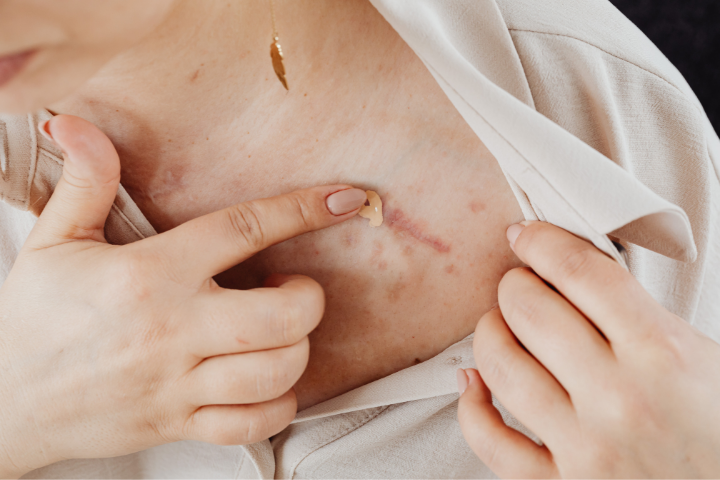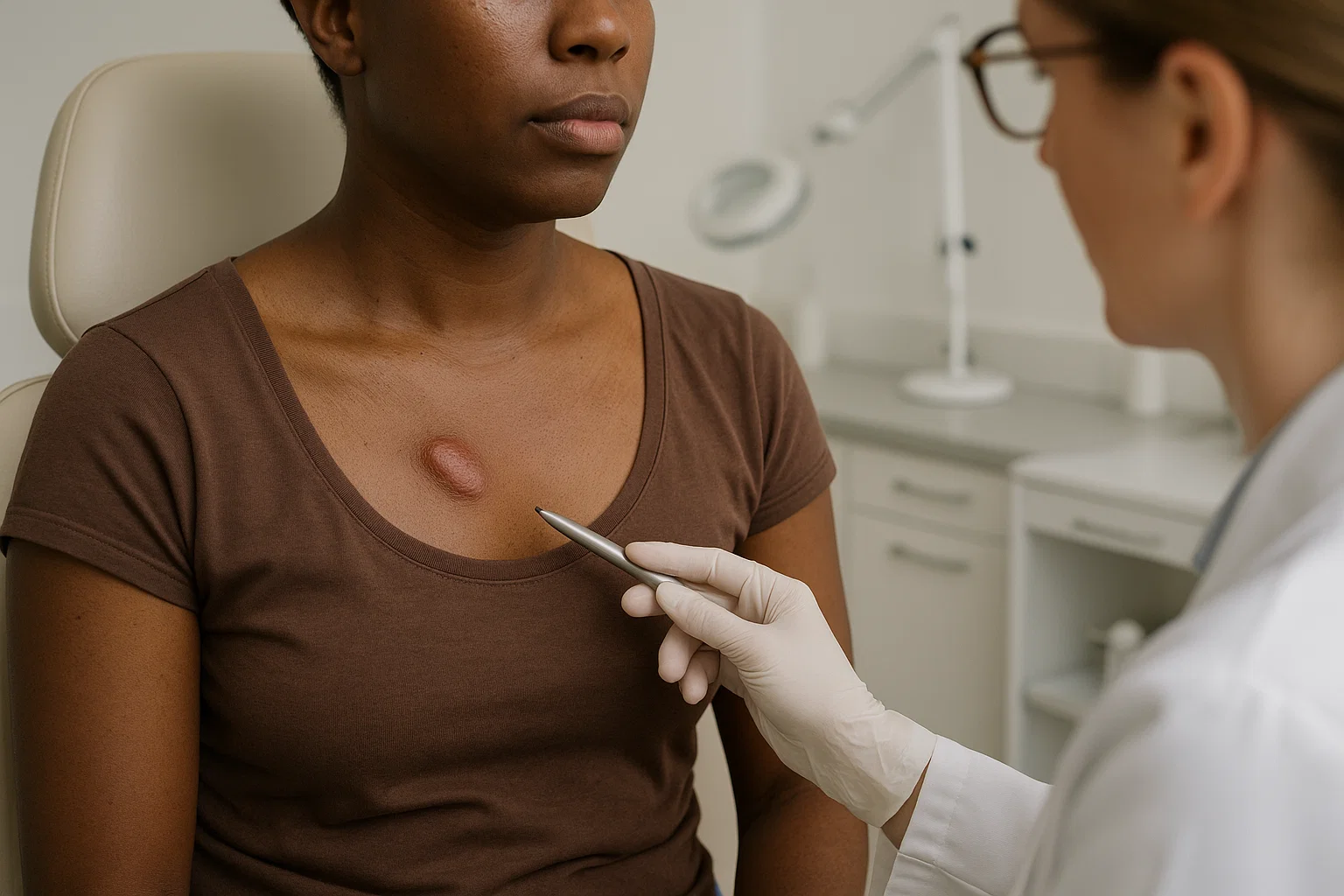
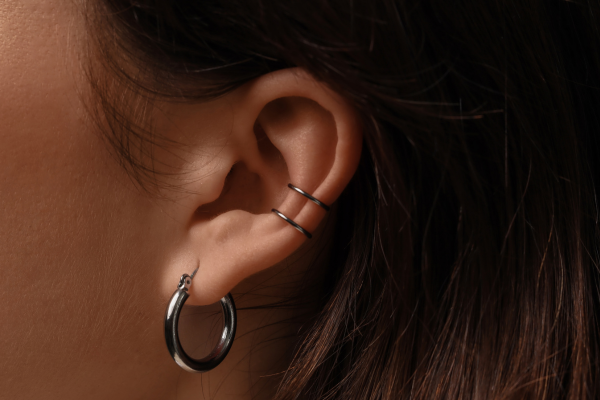
A new piercing often starts as a small, harmless bump that most people expect to fade with time. For many, it does. But for others, that raised spot can slowly become firmer, larger, and more noticeable, raising the question of whether it is still part of normal healing or the early sign of a keloid scar.
This moment of uncertainty is common. You might search for advice, compare photos, or try home remedies, hoping the area will settle on its own. When it does not, looking into treatment for ear scars or broader scar care options can give you a clearer sense of what steps may help.
In this article, we will walk through what healthy healing after a piercing usually looks like, the early warning signs of abnormal scarring, and how different approaches ranging from simple medical treatments to more advanced combination therapies are often used as part of a structured care plan.
What Normal Healing Looks Like After a Piercing
After a piercing, it is normal for the area to look slightly red, swollen, or tender during the first few days. This is part of the body’s natural response as it begins to repair the skin. You may also notice a small amount of clear or pale fluid around the jewellery, which is a common sign of early healing rather than infection.
Over the next few weeks, the skin usually becomes calmer. The redness fades, sensitivity reduces, and any small bump near the piercing hole often starts to soften and shrink. For many people, this stage is when the area begins to feel “normal” again, even if the skin still looks a little different from before.
Healthy healing tends to move in a slow but steady direction. The key sign is improvement over time, not perfection. If the area is gradually becoming flatter, less irritated, and more comfortable, it is usually following a typical healing pattern rather than developing into a more complex type of scar.
Early Signs of Abnormal Scarring

1.The bump keeps getting bigger
Instead of slowly flattening, the raised area continues to grow or spread beyond the original piercing site over several weeks or months.
2.Persistent itching or discomfort
Ongoing itching, tenderness, or a tight feeling that does not settle can be a sign that the scar tissue is still actively changing.
3.Firm or rubbery texture
When the area feels noticeably harder than the surrounding skin and does not soften with time, it may be moving beyond normal healing.
4.Changes in colour
A scar that becomes darker, shinier, or more noticeable compared to nearby skin can indicate abnormal scar development.
5.Sensitivity to touch or pressure
If light contact, sleeping in the area, or wearing jewellery causes ongoing pain or irritation, it may be worth paying closer attention to how the scar is progressing.
Who Is More at Risk of Developing a Keloid
Some people are more likely to develop keloid scars than others, even when the original piercing or wound is small. One of the strongest factors is personal or family history. If you or close relatives have had keloids before, your skin may be more prone to forming raised scars again.
Location also matters. Areas such as the earlobes, jawline, chest, and shoulders are known to be higher-risk zones because the skin in these places is often under natural tension or frequent movement.
The way the skin heals after the piercing can also influence the outcome. Infection, repeated irritation, or prolonged inflammation around the jewellery can keep the area in an active healing state for longer, increasing the chance of abnormal scar tissue forming.
Age can play a role as well. Keloids are more commonly seen in younger individuals, particularly during the teen and young adult years, when the skin’s healing response tends to be more active.
When to See a Specialist
1.The scar does not improve after several weeks
If the raised area stays the same or continues to grow instead of slowly flattening, it may be a sign that normal healing has shifted toward abnormal scarring.
2.Rapid changes in size or shape
A scar that suddenly becomes thicker, wider, or more noticeable over a short period of time should be assessed, especially around sensitive or visible areas.
3.Ongoing pain, itching, or tightness
Persistent discomfort that affects daily activities, sleep, or wearing jewellery can indicate that the scar tissue is still actively developing.
4.Previous treatments have not helped
If home care or basic treatments have not made a difference, a specialist can evaluate the scar more closely and discuss more targeted options.
What a Specialist Can Do Early On
When a raised scar is assessed early, a specialist can often help guide it in a healthier direction before it becomes more established. The first step is usually a careful look at how the skin is healing, how long the bump has been present, and whether it is staying within the original piercing site or starting to grow beyond it. This initial evaluation helps determine whether the scar is likely to settle on its own or needs a more structured approach.
In some cases, patients may be advised on simple scar treatment strategies that focus on calming the skin and reducing ongoing irritation. These early steps can be especially helpful when inflammation or repeated friction is keeping the area from settling properly.
If the scar shows signs of becoming more active or firm, medical options such as steroid injections may be considered to help soften the tissue and slow down excessive scar growth. For scars that continue to develop despite initial care, a specialist may discuss more advanced approaches, including combination treatments designed to target both inflammation and collagen production.
Throughout this process, regular follow-up plays an important role. Monitoring how the scar responds over time allows the treatment plan to be adjusted gradually, with the goal of improving comfort, appearance, and long-term control rather than chasing quick, short-lived results.
Conclusion
A raised scar after a piercing can feel like a small problem at first, but paying attention to how it changes over time can make a meaningful difference in the final outcome. Knowing what is part of normal healing and what may be an early sign of a keloid helps you take action before the scar becomes more difficult to manage.
If you are unsure about what you are seeing on your skin, exploring keloid and hypertrophic scar treatment options can provide clarity on what approaches are available and which ones may suit your situation. For those who want a more personal assessment, booking a consultation with a specialist can help create a plan based on your scar’s location, history, and long-term goals.At the London Keloid Scar Clinic, patients receive a bespoke evaluation focused on early guidance and structured care, with the aim of improving both comfort and long-term results.