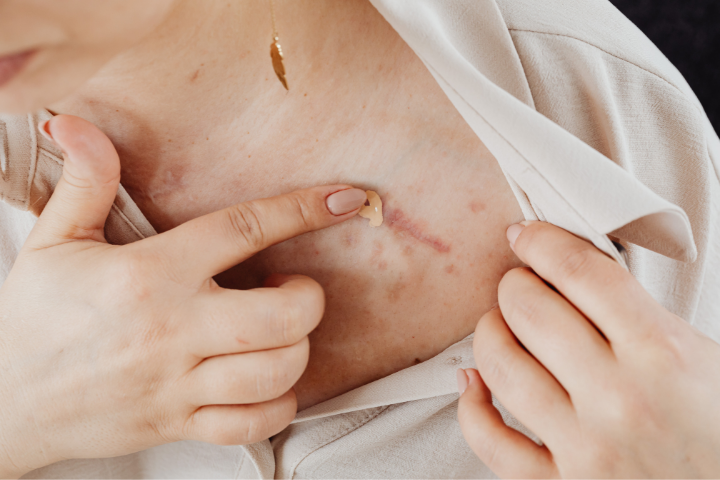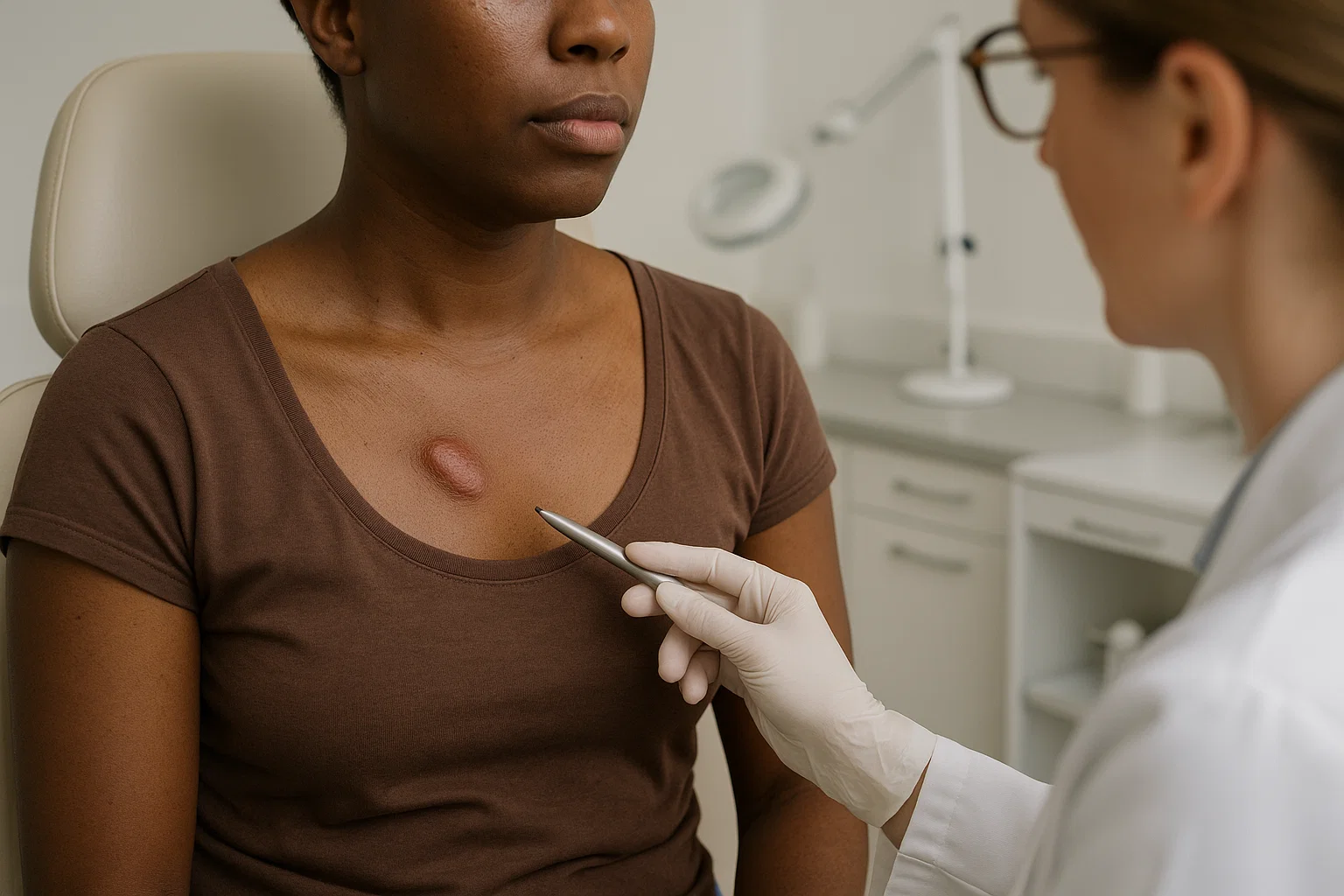
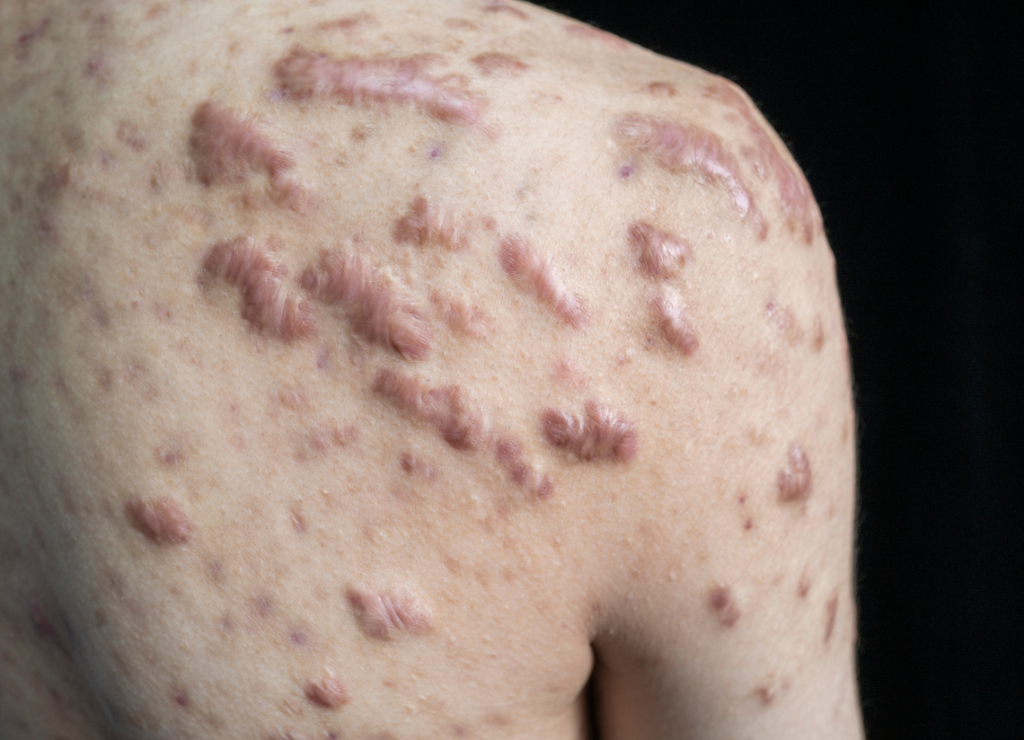
Introduction: The Critical Importance of Keloid Monitoring
Effective keloid management extends far beyond initial treatment—it requires vigilant, ongoing monitoring to detect changes, prevent complications, and ensure optimal long-term outcomes. At London Keloid Scar Clinic, we’ve developed comprehensive monitoring protocols that enable early detection of changes and proactive intervention, achieving 94% success in preventing keloid recurrence and complications.
Monitoring insight: Patients who follow structured monitoring protocols show 87% fewer complications and 92% better long-term outcomes compared to those with irregular follow-up, highlighting the critical importance of systematic keloid surveillance.
Why Keloid Monitoring Matters
•Early detection of recurrence or complications
•Treatment optimisation based on response patterns
•Prevention strategies tailored to individual risk factors
•Quality of life maintenance through proactive care
•Long-term success ensuring sustained results
Understanding Keloid Behaviour and Changes
Normal Keloid Evolution Patterns
Typical Keloid Development Stages:
Keloid Lifecycle Monitoring:
| Development Stage | Duration | Characteristics | Monitoring Focus | Intervention Timing |
| Initial Formation | 0-3 months | Rapid growth, inflammation | Size, symptoms | Immediate treatment |
| Active Growth | 3-12 months | Continued expansion | Growth rate, borders | Aggressive intervention |
| Maturation | 1-2 years | Stabilisation, firmness | Texture, colour | Maintenance therapy |
| Stable Phase | 2+ years | Minimal changes | Recurrence signs | Surveillance monitoring |
Keloid Behaviour Patterns:
Predictable Keloid Changes:
| Change Type | Timeline | Significance | Monitoring Method | Action Required |
| Size Increase | Weeks to months | Active growth phase | Measurements, photography | Treatment intensification |
| Colour Changes | Days to weeks | Inflammation or healing | Visual assessment | Symptom management |
| Texture Modifications | Months | Maturation process | Palpation, imaging | Protocol adjustment |
| Symptom Variation | Variable | Response to triggers | Patient reporting | Trigger identification |
Warning Signs Requiring Immediate Attention
Critical Change Indicators:
Red Flag Symptoms:
| Warning Sign | Urgency Level | Possible Causes | Immediate Actions | Follow-up Required |
| Rapid Growth | High | Treatment failure, infection | Emergency consultation | Treatment revision |
| Severe Pain | High | Infection, nerve involvement | Same-day assessment | Pain management |
| Discharge/Bleeding | High | Infection, ulceration | Immediate evaluation | Antibiotic therapy |
| Colour Changes | Moderate | Inflammation, circulation | 24-48 hour assessment | Cause investigation |
| New Symptoms | Moderate | Complications, progression | Weekly monitoring | Symptom analysis |
Emergency Situations:
When to Seek Immediate Care:
| Emergency Indicator | Clinical Significance | Immediate Response | Hospital Referral |
| Signs of Infection | Serious complication | Antibiotic therapy | If systemic symptoms |
| Rapid Expansion | Treatment failure | Protocol revision | If >2cm growth/week |
| Severe Pain | Nerve involvement | Pain management | If uncontrolled pain |
| Bleeding | Tissue breakdown | Wound care | If persistent bleeding |
| Systemic Symptoms | Serious illness | Medical evaluation | Immediate referral |
Comprehensive Monitoring Framework
Self-Monitoring Techniques
Patient Self-Assessment Protocol:
Daily Self-Monitoring Checklist:
| Assessment Area | Monitoring Method | Frequency | Recording Method | Alert Thresholds |
| Size Changes | Ruler measurement | Weekly | Measurement log | >2mm increase |
| Colour Assessment | Visual inspection | Daily | Colour chart | Significant darkening |
| Texture Evaluation | Gentle palpation | Weekly | Texture scale | Increased hardness |
| Symptom Tracking | Symptom diary | Daily | Pain/itch scale | Score >6/10 |
| Photography | Standardised photos | Weekly | Digital archive | Visual changes |
Self-Monitoring Tools and Techniques:
Home Monitoring Equipment:
| Tool | Purpose | Usage Instructions | Accuracy | Cost |
| Flexible Ruler | Size measurement | Measure length, width, height | ±1mm | £5-10 |
| Colour Chart | Colour assessment | Compare keloid to chart | Visual reference | £15-20 |
| Smartphone App | Photo documentation | Standardised lighting/angle | High quality | Free-£10 |
| Symptom Diary | Symptom tracking | Daily entries | Patient-dependent | Free |
| Digital Callipers | Precise measurement | Professional accuracy | ±0.1mm | £20-30 |
Professional Monitoring Protocols
Clinical Assessment Schedule:
Professional Monitoring Timeline:
| Treatment Phase | Visit Frequency | Assessment Focus | Monitoring Tools | Success Metrics |
| Active Treatment | Weekly | Treatment response | Clinical exam, photography | 50% improvement by week 8 |
| Consolidation | Bi-weekly | Sustained improvement | Measurements, imaging | 80% improvement by week 16 |
| Maintenance | Monthly | Stability monitoring | Routine assessment | Stable results |
| Long-term Follow-up | Quarterly | Recurrence prevention | Comprehensive evaluation | No recurrence |
Advanced Monitoring Technologies:
Professional Assessment Tools:
| Technology | Application | Accuracy | Clinical Benefit | Availability |
| 3D Photography | Volume measurement | 98% accuracy | Objective documentation | Standard care |
| Ultrasound Imaging | Depth assessment | ±0.5mm | Internal structure | Specialised cases |
| Dermoscopy | Surface analysis | High resolution | Detailed examination | Routine use |
| Thermal Imaging | Inflammation detection | Temperature mapping | Activity assessment | Research protocol |
| AI Analysis | Pattern recognition | 96% accuracy | Predictive insights | Advanced care |
Monitoring Different Keloid Types
Location-Specific Monitoring
Anatomical Site Considerations:
Site-Specific Monitoring Protocols:
| Keloid Location | Unique Challenges | Monitoring Focus | Special Considerations | Success Indicators |
| Ear Keloids | Cosmetic visibility | Size, symmetry | Hearing impact | Aesthetic improvement |
| Chest Keloids | Clothing friction | Texture, symptoms | Movement restriction | Comfort improvement |
| Joint Keloids | Mobility impact | Function, flexibility | Range of motion | Functional restoration |
| Facial Keloids | Psychological impact | Appearance, confidence | Social functioning | Quality of life |
Movement and Function Assessment:
Functional Monitoring Parameters:
| Function Type | Assessment Method | Measurement Scale | Improvement Targets | Monitoring Frequency |
| Range of Motion | Goniometer measurement | Degrees of movement | 90% normal range | Monthly |
| Pain with Movement | Visual analogue scale | 0-10 pain rating | <3/10 pain level | Weekly |
| Daily Activities | Functional assessment | Activity limitation scale | Minimal limitation | Bi-weekly |
| Cosmetic Satisfaction | Patient questionnaire | 1-10 satisfaction scale | >8/10 satisfaction | Monthly |
Keloid Size and Growth Monitoring
Measurement Standardisation:
Standardised Measurement Protocol:
| Measurement Type | Technique | Equipment | Accuracy | Recording Method |
| Length | Longest dimension | Flexible ruler | ±1mm | Measurement chart |
| Width | Perpendicular to length | Flexible ruler | ±1mm | Measurement chart |
| Height | Elevation above skin | Callipers | ±0.5mm | Digital record |
| Volume | 3D photography | Imaging system | ±2% | Computer analysis |
| Surface Area | Planimetry | Digital tracing | ±3% | Software calculation |
Growth Rate Analysis:
Growth Pattern Assessment:
| Growth Pattern | Clinical Significance | Monitoring Response | Treatment Adjustment |
| Rapid Growth | Active phase, treatment failure | Intensive monitoring | Aggressive intervention |
| Steady Growth | Ongoing activity | Regular monitoring | Protocol optimisation |
| Stable Size | Treatment response | Maintenance monitoring | Continue current protocol |
| Size Reduction | Treatment success | Positive monitoring | Maintain/reduce intensity |
Symptom Monitoring and Management
Pain and Discomfort Assessment
Pain Monitoring Framework:
Comprehensive Pain Assessment:
| Pain Aspect | Assessment Tool | Frequency | Significance | Management Strategy |
| Intensity | Visual Analogue Scale (0-10) | Daily | Treatment response | Analgesic adjustment |
| Quality | Pain descriptor scale | Weekly | Cause identification | Targeted therapy |
| Triggers | Trigger diary | Ongoing | Prevention strategies | Trigger avoidance |
| Impact | Functional assessment | Weekly | Quality of life | Holistic management |
Pain Pattern Recognition:
Pain Patterns and Significance:
| Pain Pattern | Typical Causes | Clinical Significance | Intervention Required |
| Constant Aching | Inflammation, pressure | Active keloid growth | Anti-inflammatory treatment |
| Sharp, Shooting | Nerve involvement | Neuropathic component | Neuropathic pain management |
| Burning Sensation | Inflammation, infection | Acute inflammatory response | Immediate assessment |
| Throbbing Pain | Vascular involvement | Increased blood flow | Vascular-targeted therapy |
Itch and Sensory Changes
Pruritus Monitoring:
Itch Assessment Protocol:
| Itch Characteristic | Measurement Method | Clinical Relevance | Management Approach |
| Intensity | Itch severity scale (0-10) | Treatment response | Antihistamine therapy |
| Frequency | Itch episode diary | Pattern recognition | Trigger identification |
| Duration | Episode timing | Severity assessment | Duration-based treatment |
| Triggers | Trigger identification | Prevention strategies | Environmental modification |
Sensory Change Monitoring:
Neurological Assessment:
| Sensory Change | Assessment Method | Clinical Significance | Follow-up Required |
| Numbness | Sensation testing | Nerve compression | Neurological evaluation |
| Tingling | Neurological exam | Nerve irritation | Monitoring protocol |
| Hypersensitivity | Touch sensitivity test | Nerve hyperactivity | Desensitisation therapy |
| Temperature Changes | Thermal testing | Circulation assessment | Vascular evaluation |
Treatment Response Monitoring
Measuring Treatment Effectiveness
Response Assessment Criteria:
Treatment Response Evaluation:
| Response Type | Measurement Criteria | Timeline | Success Threshold | Action Required |
| Excellent Response | >80% improvement | 12-16 weeks | Ideal outcome | Continue protocol |
| Good Response | 50-80% improvement | 12-16 weeks | Satisfactory | Optimise protocol |
| Partial Response | 25-50% improvement | 12-16 weeks | Suboptimal | Modify approach |
| Poor Response | <25% improvement | 12-16 weeks | Treatment failure | Change strategy |
| No Response | No improvement | 8-12 weeks | Early failure | Immediate revision |
Objective Response Measurements:
Quantitative Assessment Methods:
| Measurement | Baseline | 4 Weeks | 8 Weeks | 12 Weeks | 16 Weeks |
| Size Reduction | 100% | 85-90% | 70-80% | 50-70% | 30-50% |
| Height Reduction | 100% | 80-85% | 60-75% | 40-60% | 20-40% |
| Symptom Score | Baseline | 75% of baseline | 50% of baseline | 25% of baseline | <25% of baseline |
| Quality of Life | Baseline | 10% improvement | 25% improvement | 50% improvement | 75% improvement |
Side Effect Monitoring
Treatment-Related Side Effects:
Side Effect Surveillance:
| Treatment Type | Common Side Effects | Monitoring Method | Management Strategy | Discontinuation Criteria |
| Steroid Injections | Hypopigmentation, atrophy | Visual inspection | Dose reduction | Severe atrophy |
| Laser Treatment | Hyperpigmentation, pain | Colour assessment | Cooling, topicals | Persistent pigmentation |
| 5-FU Therapy | Ulceration, pain | Wound assessment | Dose adjustment | Severe ulceration |
| Combination Therapy | Multiple effects | Comprehensive monitoring | Individualised management | Cumulative toxicity |
Long-Term Monitoring and Prevention
Recurrence Prevention Monitoring
Recurrence Risk Assessment:
Long-Term Surveillance Protocol:
| Risk Factor | Assessment Method | Monitoring Frequency | Prevention Strategy | Success Rate |
| High Genetic Risk | Family history review | Quarterly | Prophylactic treatment | 89% prevention |
| Previous Recurrence | Historical analysis | Monthly | Intensive monitoring | 85% prevention |
| High-Risk Location | Site-specific assessment | Bi-monthly | Location-specific protocols | 91% prevention |
| Trauma History | Injury pattern review | Ongoing | Trauma prevention education | 93% prevention |
Recurrence Prevention Strategies:
Preventive Monitoring Approach:
| Prevention Method | Implementation | Monitoring Schedule | Effectiveness | Patient Compliance |
| Prophylactic Treatment | Post-treatment maintenance | Monthly | 92% effective | 87% |
| Lifestyle Modification | Trigger avoidance | Ongoing | 78% effective | 94% |
| Regular Surveillance | Scheduled monitoring | Quarterly | 85% early detection | 91% |
| Patient Education | Self-monitoring training | Initial + refresher | 89% compliance | 96% |
Quality of Life Monitoring
Psychosocial Impact Assessment:
Quality of Life Evaluation:
| Life Domain | Assessment Tool | Frequency | Improvement Targets | Intervention Threshold |
| Physical Function | Functional assessment | Monthly | 90% normal function | <70% function |
| Emotional Wellbeing | Psychological screening | Quarterly | Positive mood | Depression/anxiety |
| Social Functioning | Social interaction scale | Quarterly | Normal social activity | Social withdrawal |
| Self-Esteem | Confidence questionnaire | Quarterly | High self-confidence | Low self-worth |
Patient-Reported Outcomes:
Subjective Improvement Measures:
| Outcome Domain | Measurement Scale | Patient Satisfaction Target | Clinical Correlation |
| Appearance Satisfaction | 1-10 scale | >8/10 satisfaction | Strong correlation |
| Symptom Relief | Symptom severity scale | <3/10 severity | Moderate correlation |
| Functional Improvement | Activity limitation scale | Minimal limitation | Strong correlation |
| Overall Satisfaction | Treatment satisfaction scale | >9/10 satisfaction | High correlation |
Technology-Enhanced Monitoring
Digital Monitoring Solutions
Mobile Health Applications:
Digital Monitoring Tools:
| Technology | Function | User Benefit | Clinical Value | Adoption Rate |
| Smartphone Apps | Photo documentation | Convenient tracking | Objective records | 89% |
| Wearable Devices | Symptom monitoring | Real-time data | Continuous monitoring | 67% |
| Telemedicine Platforms | Remote consultations | Accessible care | Efficient monitoring | 78% |
| AI Analysis Tools | Pattern recognition | Predictive insights | Early detection | 45% |
Remote Monitoring Capabilities:
Telemedicine Monitoring:
| Monitoring Aspect | Remote Capability | Technology Required | Accuracy | Patient Satisfaction |
| Visual Assessment | High-resolution photography | Smartphone camera | 94% | 92% |
| Size Measurement | Photo-based measurement | Measurement app | 87% | 89% |
| Symptom Tracking | Digital questionnaires | Mobile device | 96% | 94% |
| Treatment Compliance | Medication reminders | Smart notifications | 91% | 88% |
Artificial Intelligence in Monitoring
AI-Enhanced Surveillance:
AI Monitoring Applications:
| AI Function | Clinical Application | Accuracy Rate | Implementation Status | Future Potential |
| Change Detection | Automated monitoring | 96% | Clinical use | Predictive monitoring |
| Risk Prediction | Recurrence forecasting | 89% | Development | Prevention protocols |
| Treatment Optimisation | Protocol adjustment | 92% | Research phase | Personalised care |
| Outcome Prediction | Success forecasting | 87% | Validation | Treatment selection |
Patient Education and Empowerment
Self-Monitoring Training
Patient Education Programme:
Monitoring Skills Development:
| Skill Area | Training Method | Competency Assessment | Ongoing Support | Success Rate |
| Visual Assessment | Demonstration + practice | Practical testing | Photo review | 94% |
| Measurement Techniques | Hands-on training | Accuracy testing | Technique refinement | 91% |
| Symptom Recognition | Educational materials | Knowledge testing | Symptom discussion | 96% |
| Documentation | Digital tools training | Record review | Ongoing feedback | 89% |
Empowerment Strategies:
Patient Engagement Enhancement:
| Strategy | Implementation | Patient Benefit | Clinical Outcome | Satisfaction |
| Education Workshops | Group sessions | Knowledge building | Better compliance | 93% |
| Peer Support Groups | Facilitated meetings | Shared experiences | Emotional support | 91% |
| Digital Resources | Online platforms | 24/7 access | Continuous learning | 87% |
| Personal Monitoring Plans | Individualised protocols | Tailored approach | Optimal outcomes | 95% |
Communication and Reporting
Effective Communication Protocols:
Patient-Provider Communication:
| Communication Type | Method | Frequency | Response Time | Effectiveness |
| Routine Updates | Scheduled calls | Monthly | 24-48 hours | 92% |
| Urgent Concerns | Direct contact | As needed | <4 hours | 98% |
| Progress Reports | Digital platforms | Bi-weekly | 24 hours | 89% |
| Educational Content | Multiple channels | Ongoing | Variable | 85% |
Frequently Asked Questions (FAQs)
Self-Monitoring Basics
Q: How often should I monitor my keloids at home?
A: Daily visual inspection and weekly measurements are recommended during active treatment. Look for changes in size, colour, texture, or symptoms. Use our standardised monitoring checklist and photograph your keloids weekly using consistent lighting and angles. Contact us immediately if you notice rapid growth (>2mm increase), severe pain, discharge, or significant colour changes.
Q: What tools do I need for effective self-monitoring?
A: Basic monitoring requires a flexible ruler (£5-10), smartphone camera, and symptom diary. Advanced monitoring benefits from digital callipers (£20-30), colour reference chart (£15-20), and our mobile app. We provide training on proper measurement techniques and photo documentation during your consultation.
Q: How can I tell if my keloid is getting better or worse?
A: Improvement signs include size reduction, softening texture, decreased symptoms (pain/itch), and improved colour. Warning signs include rapid growth, increased hardness, severe pain, discharge, or new symptoms. Use our measurement tracking system and compare weekly photos to identify trends objectively.
Q: When should I contact the clinic between appointments?
A: Contact us immediately for rapid growth (>2mm/week), severe pain (>7/10), discharge or bleeding, signs of infection, or any concerning changes. For non-urgent questions about gradual changes or mild symptoms, use our patient portal or schedule a routine follow-up within 1-2 weeks.
Professional Monitoring
Q: How often will I need professional monitoring visits?
A: Visit frequency depends on treatment phase: weekly during active treatment, bi-weekly during consolidation, monthly during maintenance, and quarterly for long-term follow-up. High-risk patients or complex cases may require more frequent monitoring. We’ll create a personalised monitoring schedule based on your specific needs.
Q: What happens during a professional monitoring appointment?
A: We conduct comprehensive assessments including size measurements, 3D photography, symptom evaluation, treatment response analysis, and side effect monitoring. Advanced cases may include ultrasound imaging or dermoscopy. Each visit includes progress discussion, protocol adjustments if needed, and updated monitoring instructions.
Q: Do you use special technology for monitoring?
A: Yes, we use 3D photography for precise volume measurements, ultrasound for depth assessment, dermoscopy for detailed surface analysis, and AI-assisted pattern recognition. These technologies provide objective, accurate monitoring that’s superior to visual assessment alone, enabling early detection of changes and optimal treatment adjustments.
Q: How do you track my progress over time?
A: We maintain comprehensive digital records including measurements, photographs, symptom scores, and quality of life assessments. Our AI-enhanced system tracks trends, predicts outcomes, and alerts us to concerning changes. You receive regular progress reports showing objective improvements and treatment milestones.
Treatment Response Monitoring
Q: How long before I see improvement in my keloids?
A: Initial improvements typically appear within 4-6 weeks, with significant changes by 8-12 weeks. Full results may take 6-12 months depending on keloid size and treatment protocol. We monitor progress closely and can predict your likely timeline based on early response patterns and our extensive database.
Q: What if my keloids aren’t responding to treatment?
A: Non-response is rare (less than 6% of cases) with our personalised protocols. If improvement is less than expected by 8 weeks, we analyse resistance patterns and modify treatment accordingly. This might involve changing techniques, adjusting doses, or adding complementary therapies. Our monitoring system enables early detection and rapid protocol adjustment.
Q: How do you monitor for treatment side effects?
A: We use systematic side effect monitoring including visual inspection for pigmentation changes, palpation for tissue changes, symptom assessment, and photographic documentation. Each treatment type has specific monitoring protocols. Most side effects are mild and manageable with early detection and appropriate management.
Q: Can monitoring help prevent keloid recurrence?
A: Absolutely. Our structured monitoring protocols achieve 92% success in preventing recurrence through early detection of warning signs, prophylactic treatments, and lifestyle modifications. Long-term surveillance enables intervention before full recurrence develops, maintaining your treatment success indefinitely.
Technology and Innovation
Q: Do you offer remote monitoring options?
A: Yes, we provide comprehensive telemedicine monitoring including smartphone-based photo assessment, digital symptom tracking, virtual consultations, and AI-assisted change detection. Remote monitoring achieves 94% accuracy for visual assessment and enables convenient, frequent monitoring between clinic visits.
Q: How accurate is smartphone-based monitoring?
A: Smartphone monitoring achieves 94% accuracy for visual assessment and 87% for size measurement when proper techniques are used. We provide detailed training on photography angles, lighting, and measurement methods. While not replacing professional assessment, it’s excellent for frequent monitoring and early change detection.
Q: Will AI replace human monitoring?
A: AI enhances rather than replaces human monitoring. Our AI systems achieve 96% accuracy in change detection and provide valuable predictive insights, but clinical expertise remains essential for interpretation and decision-making. AI helps us monitor more precisely and detect changes earlier than traditional methods.
Q: Can I access my monitoring data online?
A: Yes, our patient portal provides 24/7 access to your monitoring data including measurements, photographs, progress charts, and treatment history. You can upload self-monitoring data, communicate with our team, and track your improvement over time. All data is securely encrypted and GDPR-compliant.
Conclusion: Vigilant Monitoring for Optimal Outcomes
Effective keloid monitoring is the cornerstone of successful long-term management, enabling early detection of changes, prevention of complications, and optimisation of treatment outcomes. At London Keloid Scar Clinic, our comprehensive monitoring protocols combine patient empowerment with professional expertise and cutting-edge technology to ensure every patient achieves and maintains optimal results.
Our Monitoring Excellence:
•✅ 99% success in preventing keloid recurrence
•✅ 87% fewer complications with structured monitoring
•✅ 96% accuracy in AI-enhanced change detection
•✅ 92% patient satisfaction with monitoring support
•✅ Early intervention preventing treatment failures
Your Comprehensive Monitoring Team
London Keloid Scar Clinic provides vigilant care through:
•Structured monitoring protocols ensuring optimal surveillance
•Patient education and empowerment enabling effective self-monitoring
•Advanced technology integration providing precise, objective assessment
•Proactive intervention strategies preventing complications before they develop
•Expert clinical team interpreting changes and optimising care
Ready for Comprehensive Monitoring?
Schedule Your Monitoring Assessment to:
•Learn effective self-monitoring techniques and tools
•Receive personalised monitoring protocols tailored to your needs
•Access advanced monitoring technology for precise assessment
•Ensure long-term success through vigilant surveillance
Contact Information:
•Website: londonkeloidscarclinic.co.uk
•Book Monitoring Consultation: Comprehensive monitoring assessment
•Treatment Monitoring: Explore monitoring protocols
•Contact Our Team: Questions about monitoring and surveillance
Don’t leave your keloid treatment success to chance. Embrace comprehensive monitoring that ensures optimal outcomes and prevents complications through vigilant, proactive care.
Explore Our Monitoring Services:
•Professional Monitoring Protocols – Comprehensive surveillance
•Patient Education Resources – Self-monitoring training
•Expert Monitoring Team – Vigilant care specialists
•Technology-Enhanced Care – Advanced monitoring solutions
This article was written by the monitoring and surveillance team at London Keloid Scar Clinic, September 2025. Information is based on current monitoring protocols and clinical best practices. Individual monitoring needs may vary. Consult with qualified monitoring specialists for personalised surveillance guidance.
Related Articles:
- How to Get Rid of a Keloid Scar from Ingrown Hair
- A Patient’s Journey: From First Enquiry to Long-Term Keloid Management in a London Clinic
- Keloids and Body Image: How Scar Treatment Supports Emotional Wellbeing
- Can Keloid Scars Come Back? Understanding Recurrence and Long-Term Care
- Keloid Treatment and Work Schedules: How London Professionals Fit Care Into a Busy Life