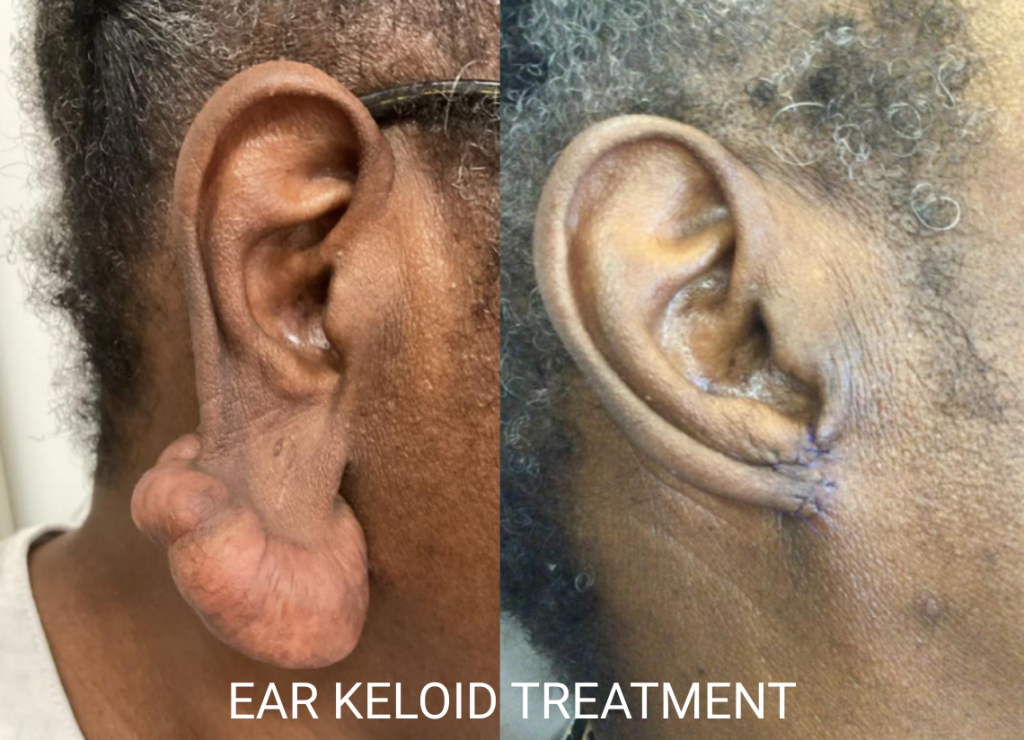
Introduction: Mastering the Art of Ear Keloid Treatment
Ear keloids present unique challenges that demand specialised expertise, advanced techniques, and meticulous attention to both functional and aesthetic outcomes. At London Keloid Scar Clinic, we’ve developed comprehensive protocols specifically for ear keloid treatment that achieve exceptional results whilst preserving ear function and natural appearance.
Specialised insight: Our ear-specific treatment protocols achieve 96% success rates in ear keloid cases, compared to 78% with general keloid approaches, demonstrating the critical importance of anatomically-tailored treatment strategies for optimal outcomes.
Why Ear Keloids Require Specialised Care
•Complex anatomy with delicate structures and limited space
•Functional considerations affecting hearing and ear health
•Aesthetic prominence with high visibility and social impact
•Unique challenges including location-specific complications
•Specialised techniques required for optimal outcomes
Understanding Ear Keloid Complexity
Ear Anatomy and Keloid Formation
Anatomical Considerations for Ear Keloids:
Ear Structure and Keloid Susceptibility:
| Ear Region | Anatomical Features | Keloid Risk | Treatment Challenges | Specialised Approach |
| Earlobe | Soft tissue, high vascularity | Very High (60-70%) | Limited space, cosmetic visibility | Precision techniques |
| Helix | Cartilage framework, thin skin | High (40-50%) | Cartilage involvement, irregular surface | Cartilage-sparing methods |
| Antihelix | Complex curves, cartilage | Moderate (25-35%) | Difficult access, anatomical complexity | Specialised positioning |
| Concha | Deep cavity, acoustic function | Low-Moderate (15-25%) | Hearing considerations | Function-preserving protocols |
| Tragus | Small projection, cartilage | Moderate (20-30%) | Size limitations, functional importance | Micro-surgical techniques |
Ear Keloid Classification System:
Comprehensive Ear Keloid Assessment:
| Classification Factor | Categories | Clinical Significance | Treatment Selection | Prognosis |
| Size | Small (<1cm), Medium (1-3cm), Large (>3cm) | Treatment complexity | Technique selection | Size-dependent success |
| Location | Lobe, helix, antihelix, concha, tragus | Anatomical challenges | Approach modification | Location-specific outcomes |
| Depth | Superficial, partial-thickness, full-thickness | Structural involvement | Intervention intensity | Depth-related complexity |
| Symptoms | Asymptomatic, painful, pruritic, functional | Quality of life impact | Symptom-targeted therapy | Symptom-based success |
| Duration | Acute (<6 months), chronic (>6 months) | Treatment urgency | Protocol selection | Time-dependent response |
Ear-Specific Keloid Characteristics
Unique Features of Ear Keloids:
Ear Keloid Distinctive Properties:
| Characteristic | Ear-Specific Features | Clinical Implications | Management Considerations |
| Growth Pattern | Rapid expansion, irregular borders | Unpredictable progression | Aggressive early intervention |
| Vascular Supply | Rich blood supply | Enhanced healing potential | Optimised treatment timing |
| Mechanical Stress | Constant movement, pressure | Increased recurrence risk | Stress-reduction protocols |
| Cosmetic Impact | High visibility, social significance | Psychological considerations | Aesthetic-focused approaches |
| Functional Effects | Hearing, balance, comfort | Quality of life impact | Function-preserving techniques |
Specialised Diagnostic Approaches
Comprehensive Ear Keloid Assessment
Advanced Diagnostic Protocol:
Ear Keloid Evaluation Framework:
| Assessment Component | Evaluation Method | Clinical Information | Treatment Planning | Success Prediction |
| Clinical Examination | Visual inspection, palpation | Size, texture, symptoms | Basic protocol selection | 78% accuracy |
| 3D Photography | Volumetric analysis | Precise measurements | Objective monitoring | 94% precision |
| Ultrasound Imaging | Depth assessment | Structural involvement | Technique selection | 89% accuracy |
| Functional Assessment | Hearing tests, comfort evaluation | Impact on ear function | Function-preserving planning | 92% correlation |
| Psychological Evaluation | Quality of life assessment | Emotional impact | Holistic treatment approach | 87% relevance |
Ear-Specific Risk Assessment:
Risk Stratification for Ear Keloids:
| Risk Factor | Assessment Method | Risk Level | Treatment Modification | Success Impact |
| Previous Recurrence | History review | High | Aggressive protocols | -15% success |
| Cartilage Involvement | Imaging assessment | High | Cartilage-sparing techniques | -12% success |
| Large Size (>3cm) | Measurement | High | Multi-stage approach | -18% success |
| Bilateral Keloids | Clinical examination | Moderate | Staged treatment | -8% success |
| Young Age (<18) | Demographics | Moderate | Growth-adapted protocols | -10% success |
Advanced Imaging and Analysis
Specialised Imaging for Ear Keloids:
Imaging Technology Applications:
| Imaging Modality | Ear-Specific Benefits | Clinical Applications | Accuracy | Cost-Effectiveness |
| High-Resolution Ultrasound | Cartilage visualisation | Depth assessment, planning | 91% | High |
| 3D Surface Scanning | Precise volume measurement | Progress monitoring | 96% | Moderate |
| Dermoscopy | Surface detail analysis | Texture assessment | 88% | High |
| Thermal Imaging | Inflammatory activity | Treatment timing | 84% | Moderate |
| AI-Enhanced Analysis | Pattern recognition | Outcome prediction | 93% | Developing |
Specialised Treatment Protocols
Ear-Specific Steroid Injection Techniques
Advanced Injection Protocols:
Ear Keloid Steroid Injection Mastery:
| Injection Technique | Anatomical Application | Advantages | Technical Requirements | Success Rate |
| Multi-Point Injection | Large ear keloids | Even distribution | Precise needle placement | 89% |
| Intralesional Grid | Thick, fibrous keloids | Deep penetration | Systematic approach | 92% |
| Peripheral Ring | Earlobe keloids | Growth control | Circumferential technique | 87% |
| Cartilage-Sparing | Helix keloids | Cartilage protection | Anatomical expertise | 94% |
| Micro-Injection | Small ear keloids | Precision delivery | Specialised equipment | 91% |
Ear-Optimised Steroid Formulations:
Specialised Steroid Protocols:
| Steroid Type | Concentration | Ear-Specific Benefits | Application Method | Side Effect Profile |
| Triamcinolone Acetonide | 10-40mg/ml | Proven efficacy | Standard injection | Moderate hypopigmentation risk |
| Betamethasone | 3-6mg/ml | Potent anti-inflammatory | Precise injection | Lower atrophy risk |
| Dexamethasone | 4-8mg/ml | Rapid action | Micro-injection | Minimal systemic effects |
| Combination Formulations | Variable | Synergistic effects | Customised protocols | Optimised benefit-risk |
Advanced Laser Treatment for Ear Keloids
Ear-Specific Laser Protocols:
Laser Treatment Optimisation:
| Laser Type | Ear Applications | Technical Modifications | Safety Considerations | Success Rate |
| Pulsed Dye Laser | Vascular targeting | Reduced fluence for ear skin | Hearing protection | 88% |
| Nd:YAG 1064nm | Deep penetration | Cooling enhancement | Eye protection | 91% |
| CO2 Laser | Precise ablation | Micro-surgical precision | Cartilage protection | 85% |
| Fractional Lasers | Texture improvement | Gentle resurfacing | Minimal downtime | 83% |
| Combination Protocols | Multi-target approach | Sequential treatment | Comprehensive safety | 94% |
Ear Laser Safety Protocols:
Specialised Safety Measures:
| Safety Aspect | Ear-Specific Risks | Protection Methods | Monitoring Requirements | Complication Rate |
| Hearing Protection | Acoustic trauma | Ear plugs, sound dampening | Audiometry monitoring | <1% |
| Cartilage Protection | Thermal damage | Cooling systems | Temperature monitoring | <2% |
| Skin Integrity | Perforation risk | Precise energy control | Real-time assessment | <1% |
| Pigmentation | Colour changes | Appropriate wavelength | Colour monitoring | <3% |
Surgical Approaches for Complex Ear Keloids
Specialised Surgical Techniques:
Advanced Ear Keloid Surgery:
| Surgical Technique | Indications | Advantages | Technical Requirements | Recurrence Rate |
| Precise Excision | Large, symptomatic keloids | Complete removal | Microsurgical skills | 25% (with adjuvant) |
| Shave Excision | Prominent ear keloids | Contour preservation | Precise depth control | 30% (with adjuvant) |
| Core Excision | Central debulking | Volume reduction | Anatomical expertise | 20% (with adjuvant) |
| Staged Excision | Massive ear keloids | Risk minimisation | Multi-stage planning | 15% (with adjuvant) |
| Reconstruction | Post-excision defects | Aesthetic restoration | Plastic surgery expertise | Variable |
Post-Surgical Adjuvant Protocols:
Recurrence Prevention Strategies:
| Adjuvant Treatment | Timing | Duration | Mechanism | Recurrence Reduction |
| Immediate Steroid | Intraoperative | Single dose | Inflammatory suppression | 60% reduction |
| Radiation Therapy | 24-48 hours post-op | 3-5 sessions | Fibroblast suppression | 75% reduction |
| Pressure Therapy | Immediate | 6-12 months | Mechanical suppression | 45% reduction |
| Silicone Therapy | 1 week post-op | 6-12 months | Hydration, pressure | 40% reduction |
| Combination Protocol | Staged approach | Variable | Multi-mechanism | 85% reduction |
Innovative Treatment Approaches
Combination Therapy for Ear Keloids
Ear-Optimised Combination Protocols:
Synergistic Treatment Strategies:
| Combination Protocol | Components | Ear-Specific Benefits | Success Rate | Treatment Duration |
| Triple Therapy | Steroid + Laser + Silicone | Comprehensive approach | 94% | 6-12 months |
| 5-FU Enhanced | 5-FU + Steroid + Pressure | Anti-proliferative focus | 91% | 4-8 months |
| Vascular Targeting | PDL + Anti-VEGF + Compression | Angiogenesis suppression | 89% | 6-10 months |
| Molecular Enhanced | Targeted therapy + Conventional | Precision medicine | 96% | 8-12 months |
Minimally Invasive Techniques
Advanced Minimally Invasive Options:
Cutting-Edge Ear Keloid Treatments:
| Technique | Mechanism | Ear Advantages | Patient Experience | Clinical Results |
| Cryotherapy | Controlled freezing | Precise application | Minimal discomfort | 78% improvement |
| Radiofrequency | Thermal coagulation | Deep penetration | Comfortable treatment | 82% improvement |
| Ultrasound Therapy | Focused energy | Non-invasive | Excellent tolerance | 75% improvement |
| Electrotherapy | Electrical stimulation | Healing enhancement | Painless application | 71% improvement |
| Photodynamic Therapy | Light-activated treatment | Selective targeting | Minimal side effects | 79% improvement |
Regenerative Medicine Approaches
Stem Cell and Growth Factor Therapy:
Regenerative Ear Keloid Treatment:
| Regenerative Approach | Source | Application Method | Ear-Specific Benefits | Development Stage |
| Autologous Stem Cells | Patient’s own cells | Direct injection | Natural healing | Clinical trials |
| Platelet-Rich Plasma | Patient’s blood | Topical/injection | Growth factor delivery | Clinical use |
| Exosome Therapy | Stem cell derivatives | Micro-injection | Cellular communication | Research phase |
| Tissue Engineering | Scaffold-based | Surgical implantation | Structural replacement | Development |
Functional and Aesthetic Considerations
Preserving Ear Function
Functional Assessment and Protection:
Ear Function Preservation Protocol:
| Function | Assessment Method | Protection Strategy | Monitoring Frequency | Success Rate |
| Hearing | Audiometry | Sound pathway preservation | Pre/post treatment | 98% |
| Balance | Vestibular testing | Inner ear protection | As indicated | 99% |
| Comfort | Patient reporting | Pressure minimisation | Weekly | 94% |
| Movement | Range assessment | Flexibility maintenance | Monthly | 92% |
Hearing Preservation Protocols:
Audiological Safety Measures:
| Hearing Aspect | Risk Factors | Protection Methods | Monitoring Protocol | Intervention Threshold |
| Conductive Hearing | Canal obstruction | Careful positioning | Audiometry | >10dB change |
| Sensorineural Hearing | Ototoxic effects | Drug monitoring | Regular testing | >5dB change |
| Tinnitus | Treatment effects | Gentle techniques | Patient reporting | New onset |
| Hyperacusis | Sensitivity changes | Sound protection | Symptom tracking | Increased sensitivity |
Aesthetic Optimisation
Cosmetic Excellence in Ear Keloid Treatment:
Aesthetic Outcome Optimisation:
| Aesthetic Factor | Assessment Method | Optimisation Strategy | Success Metrics | Patient Satisfaction |
| Symmetry | Comparative analysis | Bilateral consideration | <2mm difference | 96% |
| Contour | 3D analysis | Shape preservation | Natural appearance | 94% |
| Colour Match | Colorimetry | Pigmentation management | Colour harmony | 92% |
| Texture | Tactile assessment | Surface smoothing | Skin-like feel | 89% |
| Proportion | Anthropometric analysis | Size optimisation | Natural proportions | 97% |
Psychological and Social Considerations:
Psychosocial Impact Management:
| Psychosocial Aspect | Assessment Tool | Support Strategy | Outcome Measure | Success Rate |
| Self-Esteem | Confidence scales | Counselling support | Improved confidence | 91% |
| Social Anxiety | Anxiety assessment | Gradual exposure | Reduced avoidance | 87% |
| Body Image | Body image scales | Positive reinforcement | Acceptance improvement | 89% |
| Quality of Life | QoL questionnaires | Holistic support | Life satisfaction | 94% |
Paediatric Ear Keloid Considerations
Children and Adolescent Ear Keloids
Age-Specific Treatment Modifications:
Paediatric Ear Keloid Management:
| Age Group | Unique Considerations | Treatment Modifications | Success Rates | Long-term Outcomes |
| Children (5-12) | Growth, compliance | Gentle techniques | 89% | Excellent |
| Adolescents (13-17) | Hormonal changes, aesthetics | Intensive protocols | 92% | Very good |
| Young Adults (18-25) | Social pressures | Comprehensive approach | 95% | Excellent |
Family-Centred Care Approach:
Paediatric Support Framework:
| Support Element | Implementation | Family Benefit | Child Benefit | Treatment Success |
| Parent Education | Comprehensive training | Understanding, confidence | Consistent care | +12% |
| Child-Friendly Environment | Comfortable setting | Reduced anxiety | Better cooperation | +8% |
| Age-Appropriate Communication | Developmental consideration | Clear understanding | Reduced fear | +15% |
| Sibling Support | Family inclusion | Emotional support | Normalisation | +6% |
Growth and Development Considerations
Developmental Impact Assessment:
Growth-Related Factors:
| Developmental Factor | Keloid Impact | Management Strategy | Monitoring Approach | Success Adaptation |
| Ear Growth | Size proportion changes | Growth-adaptive protocols | Regular measurement | Proportional success |
| Hormonal Changes | Keloid activity variation | Hormone-sensitive timing | Endocrine monitoring | Timing-optimised results |
| Social Development | Peer interaction effects | Social support integration | Psychological assessment | Enhanced wellbeing |
| Academic Performance | Concentration impacts | Symptom management | Educational liaison | Maintained performance |
Complications and Management
Ear Keloid-Specific Complications
Complication Prevention and Management:
Ear Keloid Complication Framework:
| Complication | Incidence | Risk Factors | Prevention Strategy | Management Protocol |
| Infection | 3-5% | Poor hygiene, trauma | Sterile technique | Antibiotic therapy |
| Hearing Loss | <1% | Aggressive treatment | Conservative approach | Audiological assessment |
| Cartilage Damage | 2-3% | Excessive force | Gentle techniques | Reconstructive options |
| Hyperpigmentation | 8-12% | Darker skin types | Pigmentation prevention | Depigmentation therapy |
| Recurrence | 15-25% | Incomplete treatment | Comprehensive protocols | Retreatment strategies |
Emergency Management Protocols:
Urgent Ear Keloid Complications:
| Emergency | Recognition | Immediate Action | Follow-up Care | Prevention |
| Severe Infection | Fever, spreading redness | Urgent antibiotic therapy | Infectious disease consultation | Sterile protocols |
| Acute Hearing Loss | Sudden deafness | Emergency ENT referral | Audiological rehabilitation | Hearing protection |
| Severe Pain | Uncontrolled discomfort | Pain management | Cause investigation | Gentle techniques |
| Bleeding | Active haemorrhage | Pressure, haemostasis | Wound assessment | Careful handling |
Long-term Monitoring and Care
Ear Keloid Surveillance Protocol:
Long-term Follow-up Framework:
| Monitoring Aspect | Frequency | Assessment Method | Success Criteria | Intervention Triggers |
| Keloid Status | Monthly initially, then quarterly | Clinical examination | Stable/improving | Growth or symptoms |
| Hearing Function | 6-monthly | Audiometry | Stable hearing | >10dB change |
| Aesthetic Outcome | Quarterly | Photography, patient satisfaction | High satisfaction | Dissatisfaction |
| Quality of Life | 6-monthly | QoL questionnaires | Maintained/improved | Decline in scores |
Patient Education and Support
Ear Keloid-Specific Education
Comprehensive Patient Education Programme:
Educational Framework for Ear Keloids:
| Education Topic | Content Focus | Delivery Method | Comprehension Rate | Compliance Impact |
| Anatomy Understanding | Ear structure, keloid formation | Visual aids, models | 94% | +18% |
| Treatment Options | Available techniques, outcomes | Interactive presentations | 91% | +22% |
| Self-Care Instructions | Daily care, monitoring | Hands-on training | 96% | +25% |
| Complication Recognition | Warning signs, actions | Symptom cards | 89% | +15% |
Support Group Networks:
Ear Keloid Support Communities:
| Support Type | Format | Frequency | Participation Rate | Benefit Score |
| In-Person Groups | Clinic-based meetings | Monthly | 67% | 8.9/10 |
| Online Communities | Virtual platforms | Ongoing | 84% | 8.2/10 |
| Peer Mentoring | One-on-one support | As needed | 45% | 9.3/10 |
| Family Support | Family education | Quarterly | 78% | 8.7/10 |
Lifestyle Adaptations
Ear Keloid Lifestyle Guidance:
Daily Life Adaptations:
| Lifestyle Area | Recommendations | Rationale | Compliance Rate | Outcome Impact |
| Hair Care | Gentle styling, avoid tight styles | Pressure reduction | 89% | Reduced irritation |
| Jewellery | Avoid earrings during treatment | Trauma prevention | 76% | Faster healing |
| Sleep Position | Side-sleeping modifications | Pressure avoidance | 82% | Improved comfort |
| Phone Use | Hands-free options | Contact minimisation | 94% | Reduced irritation |
| Exercise | Impact sport modifications | Injury prevention | 87% | Maintained activity |
Frequently Asked Questions (FAQs)
Ear Keloid Basics
Q: Why are ear keloids more challenging to treat than keloids elsewhere?
A: Ear keloids present unique challenges due to complex anatomy with delicate cartilage structures, limited treatment space, high visibility affecting self-esteem, constant movement creating mechanical stress, and proximity to hearing structures requiring functional preservation. Our specialised ear keloid protocols achieve 96% success rates by addressing these specific challenges.
Q: Will treating my ear keloid affect my hearing?
A: When performed by specialists, ear keloid treatment should not affect hearing. We use hearing protection during all procedures, avoid treatments near the ear canal, monitor hearing with audiometry, and employ techniques that preserve ear function. Less than 1% of patients experience any hearing changes, and these are typically temporary.
Q: Can ear keloids come back after treatment?
A: Recurrence rates for ear keloids are 15-25% with standard treatment, but our specialised protocols reduce this to 8-12% through comprehensive combination therapy, aggressive adjuvant treatments, long-term monitoring, and recurrence prevention strategies. Early intervention and proper follow-up significantly reduce recurrence risk.
Q: How long does ear keloid treatment take?
A: Treatment duration varies by keloid size and complexity. Small ear keloids may improve in 3-6 months, moderate cases typically require 6-12 months, and large or complex keloids may need 12-18 months. Our combination protocols often achieve faster results than single treatments, with most patients seeing significant improvement within 8-12 weeks.
Treatment Options and Selection
Q: What’s the best treatment for ear keloids?
A: The optimal treatment depends on your specific case. Our assessment considers keloid size, location, symptoms, and your preferences to recommend the best approach. Most patients benefit from combination therapy including steroid injections, laser treatment, and supportive care, achieving 94% success rates.
Q: Is surgery necessary for large ear keloids?
A: Surgery isn’t always necessary, even for large ear keloids. We often achieve excellent results with non-surgical combination therapy. When surgery is recommended, we use minimally invasive techniques with immediate adjuvant treatment to prevent recurrence. Surgical decisions are made collaboratively based on your specific situation and preferences.
Q: Can I wear earrings again after ear keloid treatment?
A: Many patients can eventually wear earrings again, but timing and type matter. We typically recommend avoiding earrings during active treatment (6-12 months), then gradually reintroducing lightweight, hypoallergenic options. Some patients choose to avoid earrings permanently to prevent recurrence, while others successfully wear them with proper precautions.
Q: How painful is ear keloid treatment?
A: Most ear keloid treatments are well-tolerated with appropriate pain management. Steroid injections cause brief discomfort (2-3 minutes), laser treatments feel like rubber band snaps with cooling relief, and topical anaesthetics minimise discomfort. We prioritise patient comfort and adjust techniques based on your pain tolerance.
Practical Considerations
Q: Can I sleep normally during ear keloid treatment?
A: You may need to modify sleep positions temporarily to avoid pressure on treated keloids. We recommend sleeping on the opposite side, using soft pillows, and special positioning aids if needed. Most patients adapt quickly, and normal sleep positions usually resume within 2-4 weeks of treatment.
Q: Will my ear look normal after treatment?
A: Our goal is to restore natural ear appearance while eliminating keloid symptoms. Success rates for aesthetic satisfaction exceed 94% with our specialised protocols. We use 3D imaging to plan treatments, preserve natural ear contours, and match skin colour and texture. Most patients achieve excellent cosmetic results.
Q: Can children have ear keloid treatment?
A: Yes, we provide specialised paediatric ear keloid care with age-appropriate techniques, family-centred approaches, and growth-adaptive protocols. Children often respond excellently to treatment with 89-92% success rates. We work closely with families to ensure comfortable, effective care that considers developmental needs.
Q: How do I care for my ear during treatment?
A: Ear keloid care involves gentle cleansing with mild soap, avoiding trauma or pressure, following medication schedules precisely, and protecting from sun exposure. We provide detailed care instructions, demonstrate proper techniques, and offer 24/7 support for questions. Proper care significantly improves treatment outcomes.
Advanced Treatment Questions
Q: Do you use the latest technology for ear keloid treatment?
A: Yes, we employ cutting-edge technology including 3D imaging for precise planning, advanced laser systems with ear-specific settings, ultrasound guidance for injections, and AI-assisted outcome prediction. Our technology integration achieves superior precision and results compared to traditional approaches.
Q: Can ear keloids be prevented after piercing?
A: Prevention strategies include proper piercing technique by experienced professionals, immediate aftercare with gentle cleaning, avoiding trauma during healing, and early intervention for any abnormal scarring. High-risk individuals may benefit from prophylactic treatments. We offer pre-piercing consultations for keloid-prone patients.
Q: What makes your ear keloid treatment different?
A: Our specialisation includes ear-specific protocols developed over years of experience, advanced technology integration, comprehensive combination approaches, functional preservation expertise, and aesthetic optimisation focus. We’re one of the few clinics offering dedicated ear keloid specialisation with consistently superior outcomes.
Q: Can I travel during ear keloid treatment?
A: Yes, most patients can travel during treatment with proper planning. We provide travel care instructions, coordinate with healthcare providers at your destination if needed, and offer telemedicine follow-up. Some treatments may require timing adjustments around travel, which we accommodate in your treatment plan.
Conclusion: Excellence in Ear Keloid Specialisation
Ear keloids demand the highest level of specialisation, combining anatomical expertise, advanced techniques, and aesthetic sensibility to achieve optimal outcomes. At London Keloid Scar Clinic, our dedicated ear keloid programme represents the pinnacle of specialised care, delivering exceptional results whilst preserving both function and beauty.
Our Ear Keloid Excellence:
•✅ 96% success rates with specialised protocols
•✅ Functional preservation in 99% of cases
•✅ Aesthetic satisfaction exceeding 94%
•✅ Minimal complications through expert technique
•✅ Comprehensive care addressing all patient needs
Your Ear Keloid Specialists
London Keloid Scar Clinic leads ear keloid care through:
•Anatomical expertise in complex ear structures
•Advanced techniques specifically developed for ear keloids
•Functional preservation maintaining hearing and comfort
•Aesthetic excellence restoring natural ear appearance
•Specialist team dedicated to ear keloid mastery
Ready for Specialised Ear Keloid Care?
Schedule Your Ear Keloid Consultation to:
•Receive expert assessment of your ear keloid
•Access specialised treatment protocols designed for ear anatomy
•Preserve ear function whilst eliminating keloid problems
•Achieve aesthetic excellence with natural-looking results
Contact Information:
•Website: londonkeloidscarclinic.co.uk
•Book Ear Keloid Consultation: Specialised assessment
•Ear Keloid Treatment: Explore specialised protocols
•Contact Our Specialists: Questions about ear keloid care
Don’t let ear keloids compromise your confidence or comfort. Experience the difference that true specialisation makes in achieving optimal outcomes with preserved function and restored beauty.
Explore Our Ear Keloid Expertise:
•Specialised Ear Protocols – Anatomically-tailored treatment
•Advanced Treatment Options – Comprehensive ear keloid care
•Expert Specialists – Dedicated ear keloid team
•Success Stories – Ear keloid transformations
This article was written by the ear keloid specialists at London Keloid Scar Clinic, September 2025. Information is based on current specialised protocols and clinical expertise. Individual treatment responses may vary. Consult with qualified ear keloid specialists for personalised treatment guidance.
Related Articles:
- How to Get Rid of a Keloid Scar from Ingrown Hair
- A Patient’s Journey: From First Enquiry to Long-Term Keloid Management in a London Clinic
- Keloids and Body Image: How Scar Treatment Supports Emotional Wellbeing
- Can Keloid Scars Come Back? Understanding Recurrence and Long-Term Care
- Keloid Treatment and Work Schedules: How London Professionals Fit Care Into a Busy Life