
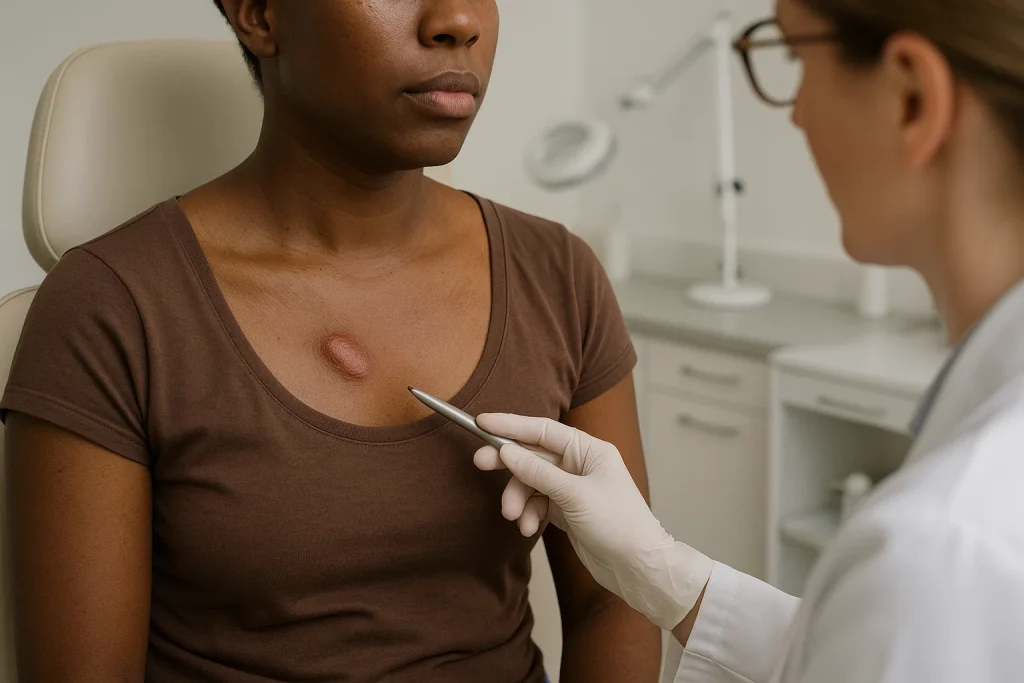
For many people exploring all keloid treatment options, one important question often comes to mind: will the scar come back after treatment? This concern is especially common among those who have lived with a keloid for a long time or have experienced changes in its size, texture, or discomfort over the years. Understanding what happens after treatment is a key step toward setting realistic expectations and reducing uncertainty.
Questions around preventing Keloid Recurrence are not about skepticism, but about wanting clarity and long-term reassurance. Unlike typical scars, keloids develop from an overactive healing response within the skin, which means their behavior can continue even after visible improvement. This is why outcomes are influenced not only by the initial procedure, but also by how the skin is supported during the healing and follow-up phases.
Rather than viewing care as a one-time intervention, many specialists approach keloid & Hyperthrophic scar treatment as an ongoing process. With personalized assessment, appropriate medical techniques, and structured follow-up, patients can better manage how a scar evolves over time helping to support both physical comfort and long-term confidence.
Why Keloids Have a Higher Risk of Recurrence
Keloids are not simply scars that failed to heal properly, they are the result of an ongoing overproduction of collagen driven by the body’s wound-healing response. Even after a keloid appears to flatten or soften following treatment, the underlying biological activity within the skin may remain active. This is one of the main reasons recurrence is more common with keloids than with typical or hypertrophic scars.
Another factor is that keloid-prone skin tends to “remember” trauma. Minor triggers such as friction, pressure, inflammation, or even small injuries near the treated area can stimulate collagen production again. Without careful monitoring, these changes may occur gradually and go unnoticed until the scar begins to thicken or darken once more.
Recurrence risk also varies between individuals. Genetics, scar location, skin tension, and how the scar originally developed all influence long-term outcomes. This is why standardized, one-size-fits-all treatments are often insufficient. Effective keloid management requires an approach that considers both the visible scar and the biological behavior beneath the skin surface.
What Increases the Risk of Keloid Returning After Treatment
1.Stopping Treatment Too Early
Many keloids respond gradually rather than immediately. When treatment is discontinued as soon as the scar looks flatter or less red, the underlying collagen activity may still be ongoing. Without completing the recommended treatment course, the risk of regrowth increases significantly.
2.Lack of Long-Term Follow-Up
Keloid scars can change slowly over time. Without scheduled follow-up appointments, early signs of recurrence such as firmness, mild itching, or colour changes—may be missed. Ongoing clinical monitoring allows specialists to adjust treatment before visible regrowth occurs.
3.Repeated Trauma or Friction to the Area
Pressure, rubbing from clothing, or minor injuries near the treated scar can reactivate the wound-healing response. Areas such as the chest, shoulders, jawline, and ears are particularly vulnerable due to constant movement or tension.
4.Scar Location and Skin Tension
Certain body areas naturally experience higher tension, which stimulates collagen production. Keloids in these locations tend to have a higher recurrence rate, even after successful initial treatment, unless tension and inflammation are carefully managed.
5.Individual Healing Tendencies and Genetics
Some individuals are biologically more prone to abnormal scarring. Family history and previous keloid formation increase the likelihood of recurrence, making specialist-led, personalised care especially important.
6.Relying on Home Remedies or Self-Treatment
Over-the-counter products and unproven home treatments may irritate the skin or cause micro-inflammation. Instead of preventing recurrence, these approaches can sometimes trigger further keloid activity.
How Specialists Reduce the Risk of Keloid Recurrence

Specialist-led keloid care focuses on controlling the biological behaviour of scar tissue rather than treating surface appearance alone. The goal is not only to flatten the scar, but to regulate inflammation and collagen production over time.
One of the key differences is structured treatment planning. Instead of a single intervention, specialists design phased treatment plans that account for scar depth, location, and how the tissue responds after each session. This allows adjustments before regrowth becomes visible.
Another critical factor is combination therapy. Treatments such as steroid injections, 5-FU, and laser therapy are often used together, as they target different mechanisms involved in keloid formation. When combined appropriately, they reduce the chance of collagen overproduction restarting.
Ongoing clinical monitoring also plays a central role. Subtle changes such as early firmness or sensitivity can be detected during follow-up visits, allowing timely intervention before the scar enlarges again.
Finally, specialists provide personalised aftercare guidance. Advice on pressure management, skin protection, and lifestyle factors helps minimise triggers that could reactivate the healing response. This continuity of care is essential for long-term stability, especially for patients with a history of recurrent keloids.
Preventing Recurrence Is a Long-Term Process, Not a One-Time Fix
For many people, the most challenging part of keloid management is accepting that treatment does not end when a scar appears flatter or less noticeable. Keloid-prone skin often retains a tendency to overreact, which means stability is achieved through consistency rather than a single successful session.
This is where a long-term medical strategy becomes essential. Regular review allows specialists to assess how scar tissue behaves over time, not just how it looks immediately after treatment. Small adjustments, early maintenance sessions, or preventive measures can make a significant difference in avoiding recurrence.
Importantly, long-term care does not mean constant treatment. It means having a clear plan, knowing what signs to watch for, and having access to specialist input when needed. This approach shifts keloid care from reactive to proactive, helping patients maintain results with confidence rather than uncertainty.
Conclusion
If you have experienced keloids returning after previous treatment, or feel unsure whether your scar is truly stable, a specialist assessment can provide clarity. Understanding the behaviour of your scar tissue is often the first step toward preventing recurrence, not an obligation to begin treatment immediately.
At London Keloid Scar Clinic, consultations focus on evaluating risk, explaining options clearly, and outlining realistic long-term strategies tailored to your skin. For many patients, this professional insight becomes the turning point between repeated regrowth and lasting control.
Frequently Asked Questions (FAQ)
1.Can keloids come back even after successful treatment?
Yes. Even when a keloid responds well and appears flatter or lighter, the underlying skin can still be prone to abnormal scar growth. This is why recurrence is possible, especially without proper follow-up or preventive care.
2.How soon can a keloid start returning after treatment?
In some cases, early signs of recurrence may appear within a few months, while in others it can take longer. Subtle changes such as firmness, tightness, or mild itching are often the first indicators rather than visible growth.
3.Does recurrence mean the treatment failed?
Not necessarily. Keloids behave differently from normal scars. A recurrence usually reflects the biological tendency of the skin rather than the quality of the initial treatment. Ongoing management is often part of effective keloid care.
4.Are follow-up appointments really necessary if the scar looks stable?
Yes. Follow-up allows specialists to detect early changes beneath the surface before visible regrowth occurs. Addressing these changes early can help prevent the scar from becoming raised again.
5.Can lifestyle or daily habits affect keloid recurrence?
Certain factors such as repeated friction, pressure on the scar area, delayed treatment of inflammation, or unprotected healing after procedures can increase the risk of recurrence. A specialist can advise on practical adjustments based on your routine.
6.Is long-term keloid management suitable for busy professionals?
Absolutely. Long-term care does not mean frequent clinic visits. It focuses on strategic timing, monitoring, and early intervention when needed, making it compatible with full work schedules and travel.
7.When should I consider seeing a specialist again after treatment?
If you notice changes in texture, colour, tightness, or discomfort—or if you simply want reassurance that your scar is stable—a specialist review can provide clarity and guidance without pressure to proceed with treatment.